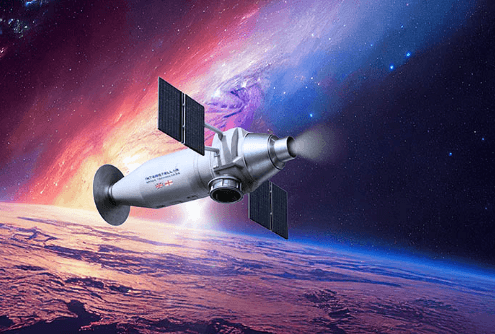
Interstellar technology blends physics with engineering to push beyond the solar system. Feasible propulsion is evaluated by energy density, thrust, and travel time, revealing trade-offs and limits. Life support and materials science must endure decades, requiring redundancy and closed loops. Autonomous probes reduce latency and maximize data return per unit energy. Mission architectures weigh durability against risk and maintenance, all within governance and ethical constraints that shape what progress can justify. The next step invites scrutiny of each assumption.
What Is Interstellar Technology Anyway?
Interstellar technology refers to the engineering and physical concepts capable of operating, communicating with, or traversing beyond the Sun’s gravitational influence to other star systems. It is a framework of feasible, testable methods rather than myth, emphasizing measurable requirements, costs, and limits.
SPACE ECONOMICS and ETHICAL IMPACTs frame deployment, risk, and governance, guiding choice under uncertainty and collective restraint.
Breakthrough Propulsion Concepts for Star Travel
The discussion surveys concepts with quantified performance bounds, outlining propulsion paradoxes and their artificial limits, while assessing energy densities, thrust-to-weight, and acceleration profiles.
Relativistic challenges emerge, including time dilation and navigation accuracy, driving speculative yet structured evaluation of feasible trajectories, propulsion architectures, and mission timelines.
Materials and Life Support to Go Long-Distance
How long can a voyage endure with materials engineered for resilience and life support systems calibrated for extreme isolation?
In interstellar systems, materials science guides redundancy, microgravity adaptation, and radiation tolerance, while life support optimizes closed-loop air, water, and nutrient cycling.
Quantitative expectations suggest decades of operation at scale, with predictable degradation and replacement cycles, enabling long distance exploration and freedom-driven endurance.
Autonomous Probes and In-Situ Exploration
The approach emphasizes intrinsic motivation for self-guided discovery, minimizing latency, and maximizing data return per energy unit.
Mission tradeoffs include reduced control, risk of autonomous error, and scanning cadence versus onboard processing limits.
Quantitative forecasts remain speculative yet actionable for design benchmarks.
See also: Intelligent Systems in Medicine
Frequently Asked Questions
How Close Are We to Building Practical Interstellar Probes?
A practical interstellar probe is still decades away. The assessment hinges on interstellar propulsion breakthroughs and solar sail feasibility; progress shows incremental gains, yet robust, reliable missions require sustained funding, revolutionary propulsion concepts, and scalable, testable prototypes before deployment.
What Are the Biggest Ethical Concerns of Interstellar Missions?
The biggest ethical concerns involve evaluating ethical implications of potential contamination and harm; planetary protection remains central. Quantitative risk estimates, autonomy of recipients, and freedom-minded governance must balance exploration with precaution, monitoring costs, and long-term planetary stewardship.
Could Aliens or Natural Phenomena Affect Probe Design?
Aliens or natural phenomena could influence design, affecting interstellar propulsion choices and probe survivability; engineers quantify risks, calibrate shielding, account for micrometeoroids, radiation, and gravitational assists, while preserving autonomy and freedom in mission parameters.
What Would Be the Economic Cost of Interstellar Exploration?
Akin to a tightrope walker over vast uncertainty, the economic cost of interstellar exploration hinges on economic viability, funding strategies, ethical considerations, and legal frameworks; speculative estimates suggest multi-trillion-dollar scales, with phased, collaborative, transparent approaches enhancing long-run feasibility.
How Long Would Return Data Transmission Realistically Take?
Return data transmission would take decades to centuries, depending on distance and relay strategy. Long range comms face relativistic delays, with signals arriving years after emission; speculative architectures may reduce latency but cannot overcome light-speed limits.
Conclusion
Interstellar technology, while speculative, rests on quantifiable drivers: energy density, thrust, and reliability. A striking stat: even a modest fusion-based beacon achieving 10^16 joules per kilogram could impart 0.1 g to a 1,000 kg probe for months, enabling interstellar cruise if combined with autonomous life-support redundancy and radiation shielding. The path hinges on closed-loop systems, robust shielding, and scalable propulsion concepts. If proven viable, missions become repeatable, not rare, redefining humanity’s reach within measurable, controllable risk.